Tel:+86 20 3668 9888
E-mail:Annie@gmail.com
Tel:+86 20 3668 9888
E-mail:Annie@gmail.com

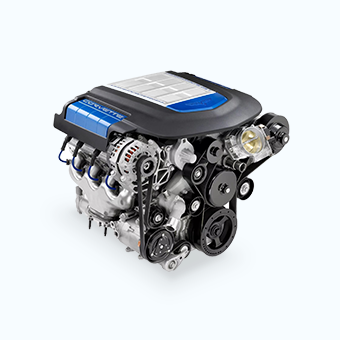
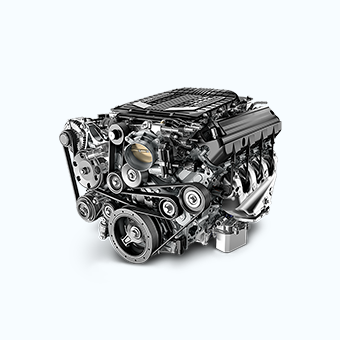
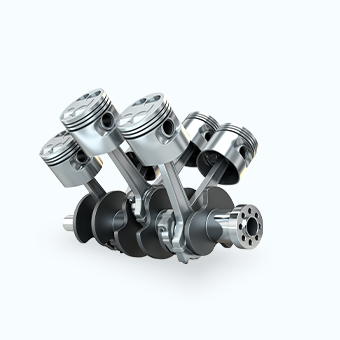
The V-type engine is named based on its layout shape. The advantage of a V-type engine is that its center of gravity is relatively low, and because adjacent cylinders are misaligned, V-type engines with the same number of cylinders are shorter in length and lower in height compared to inline engines, making it easier to layout in the engine compartment.
Another benefit is the misaligned layout. When the cylinder moves back and forth, the vibration is partially offset by itself, so the smoothness of V6, V8, and V12 is relatively good. But if compared purely from a structural perspective, the smoothness of the L6 can still be better than that of the V6. The disadvantage of a V-type engine is that it requires two sets of cylinder heads and the internal water circuit of the engine is relatively complex, so the manufacturing cost is high. It is generally used in mid to high end vehicle models.
V6 has always been seen as an entry-level standard for high-end models, but now there are also entry-level 2.0T models available for high-end models.
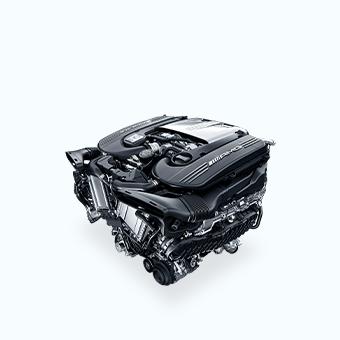
The V8 engine has always been regarded as a representative of passion. The Mercedes AMG63 series often uses V8, and American muscle cars have a special fondness for V8 because its power is always very aggressive and can bring more surprises to people.
V12 has always been regarded as an artistic presence, usually installed on the flagship models of the brand. It represents smoothness, represents the level of the model, and more importantly, represents the strength of the owner.
Due to poor smoothness, the V10 engine is equipped with fewer models, represented by the Lamborghini Hurac á n and Audi R8. The V2 engine has always been a standard feature of Harley motorcycles and is often installed on models such as the Augusta and Indian, while the V4 engine has always been favored by high-performance motorcycles such as the Ducati.